

History of the Watch Cap
A small piece of working clothing with a long life at sea
There are few pieces of clothing simpler than a knitted wool cap. No fastenings, no peak, little construction beyond yarn, shape and a folded cuff. Perhaps that is one reason it has survived for so long.
The watch cap as we recognise it today is closely associated with sailors and naval clothing. Its history, however, begins long before anyone called it a watch cap.
Knitting had spread through Europe by the late Middle Ages. By the sixteenth century, knitted wool caps were common enough in England to support an established trade. In 1571, Parliament even passed legislation requiring large parts of the population to wear English-made knitted wool caps on Sundays and holidays, an attempt to protect domestic cap makers. Surviving examples from the period show that knitted headwear was already an ordinary and highly developed form of clothing.
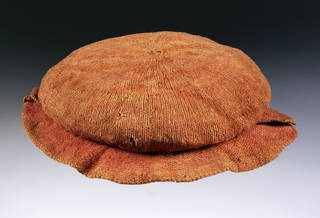
One particularly relevant branch of this history comes from Monmouth in Wales. The town had become a centre of knitted cap production by the fifteenth century, and its so-called Monmouth caps were worn by soldiers and sailors. They were practical objects rather than fashion accessories: dense wool, compact construction and a shape suited to work.
That does not make the Monmouth cap the direct ancestor of every modern watch cap. Clothing rarely develops in such a neat line. What it does show is that close-fitting knitted wool caps had already become part of European working and maritime dress centuries before the modern naval version appeared.
Wool at sea
Some of the most remarkable surviving evidence comes from Spitsbergen.
In 1980, archaeologists examined the graves of 185 Dutch whalers and workers from whale-oil stations who had died in the Arctic during the seventeenth and eighteenth centuries. Many were buried still wearing their knitted wool caps. The Rijksmuseum now holds a number of them. Some are striped, some doubled for warmth, some have folded edges and some have ear flaps. They were personal enough that, according to the museum, colour and pattern may have helped identify men whose bodies were otherwise almost completely covered against the cold.

They are not watch caps in the modern military sense. They are something more useful historically: physical proof of how important knitted wool headwear had become to people working in extreme maritime conditions.
The examples also complicate a story that is often repeated today.
Short knitted caps are sometimes said to have been worn above the ears so that sailors, fishermen or dock workers could hear shouted instructions. It is a plausible explanation. On a working deck, unobstructed hearing and vision clearly matter. But there seems to be little primary evidence that this was the reason the style originated.
In fact, historical caps were worn in many ways. Some of the Spitsbergen examples explicitly had ear flaps, while modern US Navy regulations require the official watch cap to be worn across the ears.
The more convincing explanation is simpler. A knitted cap with a generous cuff is adjustable by nature. Pull it down when conditions demand more protection. Roll it higher when they do not.
Its form follows use.
The watch cap becomes official
By the end of the nineteenth century, the term watch cap had entered English. Dictionary records place its use in roughly the 1885 to 1890 period, describing the familiar dark knitted naval cap.
In 1897, US Navy uniform regulations gave the object an unusually precise definition.
The official watch cap for enlisted sailors was to be knitted from dark navy-blue worsted wool, closely woven and conical in shape. It was ten inches long and finished with a two-and-a-half-inch folded hem. Regulations allowed it to be worn at sea and as part of working dress under specified conditions.
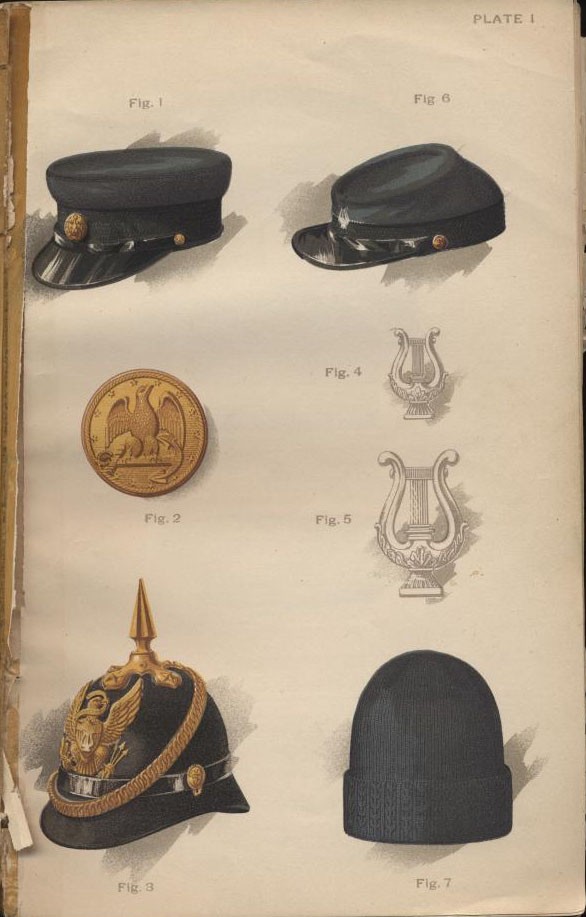
The name itself reflects its naval setting. A ship's crew works in watches, with groups of sailors taking responsibility for the vessel during defined periods. A warm cap suited to those hours on deck naturally became associated with the watch.

By this point, the ingredients of the modern watch cap were established: wool, dense knitting, a close fit and a folded cuff.
They remain largely unchanged.

Why the design lasted
The absence of a brim matters on a working cap. There is nothing large to catch the wind and little to obstruct the wearer's field of vision. Knitting creates stretch without complicated adjustment hardware. The folded cuff adds a second layer of insulation around the part of the head where it is most useful and allows the depth of the cap to be altered.

It can be folded into a pocket. It does not need careful shaping. It improves rather than deteriorates visually when it becomes familiar and slightly worn.
That is a quality shared by many pieces of traditional work clothing. Their appearance was never entirely separate from their purpose.

Wool, reconsidered
Traditional watch caps were made from wool because wool performed well in the conditions for which they were intended.
For GR05, we use 100% merino wool.

Merino retains the basic advantages that made wool useful for working clothing while producing a softer, more comfortable cap. Its fibres can absorb and release moisture vapour, helping to regulate the microclimate around the body. Wool also naturally resists the build-up of odour and can often be refreshed simply by airing rather than washing. Fine merino fibres bend more readily than coarser wool, which is one reason the material feels considerably softer against the skin.
There is nothing particularly new about using a natural fibre to manage warmth and moisture. The technology is simply part of the material.
GR05
Our version keeps the idea deliberately simple.
GR05 Watch Cap is knitted from 100% RWS-certified merino wool with a wide folded cuff. It can be pulled lower when warmth is needed or rolled higher and worn above the ears. Fits all heads between 56 and 60 cm. Comes in coulours Signal Amber and Harbour Taupe.

We prefer the latter.
You think because history tells us there is one correct way to wear a watch cap? It does not.
Rather because the freedom to adjust it is part of what made this small piece of working clothing useful in the first place.
Centuries of different versions suggest the same thing: when an object is simple enough, people find their own way to use it.


